<?xml version="1.0" encoding="UTF-8"?>
<feed xmlns="http://www.w3.org/2005/Atom">
  <icon>https://adamjuras.com/images/adam-juras-ef8089cc72799436d570e5e3075bc904.webp?vsn=d</icon>
  <subtitle>Written by Adam Juras</subtitle>
  <link href="https://adamjuras.com/"/>
  <link rel="self" href="https://adamjuras.com/feed.xml"/>
  <author>
    <name>Adam Juras</name>
    <email>adam@adamjuras.com</email>
  </author>
  <id>https://adamjuras.com/</id>
  <title>Adam Juras</title>
  <updated>2026-04-03T21:11:26.264311Z</updated>
  <entry>
    <content type="html"><![CDATA[<p>
It’s a daunting task to learn anything that is as complex as coding. People you follow are disproportionally more knowledgable than you are. You have acquaintances who are smarter. And every day you discover at least one new term that uncovers an ocean full of information.</p>
<p>
You start questioning yourself.</p>
<p>
These thoughts have a tendency to sneak up on you especially when you’re facing hard problems. </p>
<p>
But you know what? There’s something worse than this.</p>
<p>
Everyone else having conversations, but you lack the depth to pitch in. Working side by side with developers, but stopping where the actual fun begins. Reading up on all these new technologies, but not having the skills to try them.</p>
<p>
Programming makes me feel accomplished.</p>
<p>
Confidently hitting key after key, line after line to the sounds of your favourite playlist. Having all this work done at the end of the day and feeling the need to show it to everyone. Seeing the lines you wrote solving problems for tens of thousands of people. </p>
<p>
Nothing else gives me this level of satisfaction. When you master a craft, anything where you create something, you get a certain type of high. And it is the reason why I started programming again.</p>
]]></content>
    <id>https://adamjuras.com/posts/why-i-went-back-from-product-manager-to-developer</id>
    <title>Why I went back from Product Management to Engineering</title>
    <updated>2017-10-08T00:00:00Z</updated>
  </entry>
  <entry>
    <content type="html"><![CDATA[<p>
<em>Written in Hakone, Japan 🇯</em></p>
<p>
The more I travel and see the world, the more I love Europe and my roots.</p>
<p>
Recently I’ve read a study saying that 92% of europeans are pessimistic about their future. Only 8% believe that things are getting better. That’s alarming!  <br>
This collective feeling has great impact on everything around us: our self-perception, work, society, and the economy. </p>
<p>
The news have that constant negative tone, because hey: that’s what sells. And it’s always been like this! </p>
<p>
Choose what you read. </p>
<p>
There’s clear evidence that life has never been so good as it is today. </p>
<p>
Need proof?</p>
<ul>
  <li>
Advancements in medicine to cure disease and lower child mortality around the globe.  </li>
  <li>
Accessible and free education available online, you can take Stanford and MIT courses for free.  </li>
  <li>
Deaths by war are at an all-time low.  </li>
  <li>
We finally have enough momentum to create a culture where we don’t discriminate based on gender, skin color or sexual preference.  </li>
</ul>
<p>
There are still lots of issues to be solved and I’m aware that wealth is not equally distributed, but for this we need doers.</p>
<p>
We are facing huge challenges with immigrants and global warming. These problems have a scale never seen before, and we can only solve them together.</p>
<p>
Up for the challenge? Good. I’m with you. </p>
<p>
If you’re thinking ‘but what can a simple woman/man like me do’, the least you can do is to believe in the ones who are trying. Support their efforts.</p>
<p>
There’s a perverted ‘coolness’ perceived by some in being a pessimist. Believe me, it’s not. </p>
<p>
The way of least resistance is to be a pessimist. Pessimists are also more likely to be closer to reality. But that’s the easy way! </p>
<p>
There’s a saying I really like: “Pessimists are right, optimists are successful”. (And optimists are happier too.)</p>
<p>
We need optimists to drive change, to keep improving and fight the good fight. </p>
<p>
We need you.</p>
<p>
So, my friends, in 2018 be an optimist. Be a doer.</p>
]]></content>
    <id>https://adamjuras.com/posts/the-world-needs-optimists</id>
    <title>The world needs optimists</title>
    <updated>2017-12-29T00:00:00Z</updated>
  </entry>
  <entry>
    <content type="html"><![CDATA[<p>
I started web development exactly 10 years ago. During the past years I’ve worn several hats, from developer to project manager, product manager, I am now back to my initial love: web development.</p>
<p>
When I picked up web dev last year in April, it felt better than ever. Why? What changed in the past years? Did I mature or the business?</p>
<p>
I sure hope both, but for the latter I’ve gathered some points. Let me explain what improved.</p>
<h2>
Browsers.</h2>
<p>
No more special code for IE6 &amp; IE7. You might say that Safari is the new IE. But nowadays we don’t spend 30% of our time writing code to make everything work in one single browser</p>
<h2>
Development environment</h2>
<p>
Setting up your local environment? Just hit. It wasn’t so long ago when we’ve needed to go through a 2 page checklist to install a bunch of dependencies, configure Apache, databases, XDebug, php.ini and what not. 3 coffees and a couple of <em>f words</em> later you’ve felt like taming a dragon, while all you did was the equivalent of today’s <code class="inline">npm i &amp;&amp; npm start</code>. It just works TM!</p>
<p>
Plus I’ve never had such a positive experience with an IDE like with VSCode. Comes out of the box with a solid set of features provided with no config.</p>
<h2>
NPM</h2>
<p>
1 million packages at your fingertips. Enough said.</p>
<h2>
Best practices &amp; New language features (ES2016 &amp; ESNext)</h2>
<p>
It always felt dirty to write Javascript. jQuery surely had its role, but writing <code class="inline">$</code>, <code class="inline">fn.prototype</code> , declaring global variables for everything and not having conventions was causing headaches.</p>
<p>
Then there are the new features. Spread operator? Template literals? Functional Javascript? Yes, please!</p>
<p>
Javascript came a long way.</p>
<h2>
Tooling</h2>
<p>
Prettier &lt;3, ESLint, Webpack. CircleCI and all other tools for CI, Sentry for bug reporting, Jest &amp; Enzyme, Cypress.io. We’re lucky to have great tools!</p>
<h2>
Templating</h2>
<p>
You remember smarty? How about Twig or Swig? Passing variables one by one to the template and then writing a combination of PHP, JS and HTML was a huge pain. And let’s not even mention sharing localised strings between backend and frontend.</p>
<h2>
State management</h2>
<p>
I didn’t even get why this was such a huge deal until I started doing React. </p>
<h2>
Components</h2>
<p>
Working in outsourcing for several years, our plan was always to create modules that we can reuse across projects / clients. Authentication, listings, search and so on. Every time we were convinced that we’re on the right track, invested extra effort to make it happen, but the plan went down the chimney most of the times. For one reason or the other, the component had to be modified so much that it just felt super dirty.</p>
<p>
For the first time I’m writing plug &amp; play components. React rocks!</p>
<h2>
Write once, run everywhere</h2>
<p>
Cheesy tagline, but for the first time I’ve seen the real benefit of running JS on four different platforms.  My cousin Peter Juras  &amp; team are setting new standards in the restaurant ordering industry and he has set up a kraken with more tentacles that I can count with minimal help apps for iOS, Android, Raspberry Pi and Web. They orchestrate the whole communication between (hungry) customer, kitchen, waiter, receipt printer and restaurant manager using Javascript and a bunch of Amazon Cloud services. If this isn’t a real selling point for JS, I don’t know what is.</p>
<p>
To summarise, app development never felt better. The ecosystem is thriving, the language matured, awesome tools pop up every other day and my developer experience is off the charts.</p>
<p>
If you’ve been considering to join the party, now’s the time.</p>
<p>
Is there anything that you’ve missed from this article? What’s a cool feature that you love and I forgot to mention? Happy to hear your thoughts.</p>
]]></content>
    <id>https://adamjuras.com/posts/what-changed</id>
    <title>What changed</title>
    <updated>2018-01-28T00:00:00Z</updated>
  </entry>
  <entry>
    <content type="html"><![CDATA[<p>
After 6.5 years of being part of the best team I’ve ever met, March marked my last month at tutti.ch.</p>
<p>
I needed some time to reflect, and now that I’m starting a new chapter, I can share my thoughts.</p>
<p>
It wasn’t an easy decision to leave as we’ve not only created a culture that’s truly special, but managed to turn the ship around while scaling the team from 20 to 60+ people across multiple countries. </p>
<p>
This was only possible with many, many hours invested, together with the proverbial blood, sweat &amp; tears from the entire team. We worked as if it would be our own company, because that’s how it felt like.</p>
<p>
There were times where the going got tough and I was thinking about quitting. But boy, am I glad I stayed and unlocked all the lessons! </p>
<p>
It’s common to think that the grass is greener on the other side. To believe the perfectly written job ads. To go for that 10% increase in salary. To ditch the old and jump on the new. But tutti.ch taught me that it’s worth it to push through challenges and create the environment you wish you’d find in a new place. </p>
<p>
It’s worth playing long-term games with long-term people, a lesson I’ll apply anywhere I go. I follow this principle even in areas outside of work - be it my dentist, the car garage, the dog trainer, or my personal life. It never failed me.</p>
<p>
The proof? We had the lowest employee churn and the highest employee satisfaction within TX Markets. </p>
<p>
Dear tuttis, thanks a lot for trusting me and putting up with all the good &amp; the bad, I love you OL!</p>
<p>
Here’s to the loudest ones in the building 🥂</p>
<p>
So what’s next, you might ask? That deserves a separate post, this one’s only for tutti.ch</p>
]]></content>
    <id>https://adamjuras.com/posts/goodbye-tutti-playing-longterm-games</id>
    <title>Goodbye, tutti.ch</title>
    <updated>2022-02-01T00:00:00Z</updated>
  </entry>
  <entry>
    <content type="html"><![CDATA[<p>
I’ve been quiet recently, and there’s a reason for it.</p>
<p>
End of 2022, I was about to face a year full of questions. After 13 years of working back-to-back jobs, it was inevitable.</p>
<p>
Am I still on the right path? Am I <a href="https://cdixon.org/2009/09/19/climbing-the-wrong-hill" target="_blank">climbing the wrong hill</a>? Why am I doing what I’m doing? I felt tired and started losing the joy I once had in my day to day job. </p>
<p>
Why was this happening? </p>
<p>
Was it a mid-life crisis? (I sure hope I didn’t reach “halftime” yet)  <br>
Was it a burnout?  <br>
Or simply a reaction to the pandemic?</p>
<p>
None of these quite fit.</p>
<p>
But, like many of you, I too was pondering my future and thinking about a break.</p>
<p>
You see more and more people quitting their jobs for time off, but rarely hear about the outcomes.</p>
<p>
For the ones who can relate, I wanted to show you what my year actually looked like. Maybe it inspires you to embark (or not to embark) on a similar journey.</p>
<p>
So, here’s my story.</p>
<p>
End of 2022, I quit my job. For the first time ever, I didn’t have a plan. No main plan, no backup plan, nothing. It was scary, but it felt right.</p>
<p>
In January 2023, I decided to take whatever time I needed to figure things out. </p>
<p>
Initially I planned 1 month. Then 3 months. Now, 1 year later, I feel like I arrived.</p>
<p>
It was probably the most exhausting year I had in a long time, but today I know, it was necessary.</p>
<p>
In 2023, I looked into my physical and mental well-being, tried out a completely new career as a dog behaviourist, picked up old hobbies again, but also escaped the productivity hamster-wheel and learned to do nothing.</p>
<p>
The first couple of months, I really struggled to let go. I didn’t have any “work work”, but every day I kept sitting 8+ hours in front of my computer, doing courses, workshops, being “busy”. Nothing really changed, the inertia was too strong. </p>
<p>
That was the first thing that needed to stop. It was hard, but eventually it got better.</p>
<p>
So I embraced doing nothing. </p>
<p>
The next weeks were fun, but it got boring pretty quickly. Despite the lack of external stress and an empty to-do list, I was feeling worse. </p>
<p>
I’m not good at being idle. Probably none of us are. There’s the good kind of idle, where you are meditative and relax, but if that’s the main purpose of your day, you’re soon going to have a bad time.</p>
<p>
Then I picked myself up and started following my curiosity. That got me going, and slowly things started improving.</p>
<p>
I’ve come full circle, but the saying is true: the journey matters more than the destination. I learned valuable lessons along the way. I feel curious, energised, and most importantly centered.</p>
<p>
There’s so much more to say, but being a private person, writing a post like this already pushes my comfort limit. If it got you thinking or it raised questions, my inbox is always open.</p>
<p>
I have exciting plans for 2024 and will share more going forward.</p>
<p>
Thanks for reading and I wish you all a Happy New Year!</p>
<p>
Later Edit: some friends asked me about what I actually did.</p>
<p>
Here’s what I ended up doing in 2023 (chronological order):</p>
<ol>
  <li>
Took lots of time to reflect on what I want to do going forward.   </li>
  <li>
Spent quality time with my family &amp; friends.  </li>
  <li>
Learned about the human metabolism and Continuous Glucose Monitors. I improved my diet and exercise, fixing my glucose levels.  </li>
  <li>
Built Spearmint.health, an app that helps evaluate glucose levels. Learned React Native &amp; Elixir Lang along the way.   </li>
  <li>
Started travelling. Short trips between 4-7 days work best for me. Not everyone’s a great explorer or a digital nomad, and that’s okay.  </li>
  <li>
Picked up old hobbies. I took many nice pictures. I started making music (or: randomly turning knobs &amp; pressing buttons)  </li>
  <li>
Tried out a new career: Dog behaviourist for aggressive dogs. Loved the outdoors and dogs, but my passion stays in tech.  </li>
  <li>
Fell in love with reading again. Fiction is way more fun than I thought. It calms my mind.  </li>
  <li>
Studied ADHD and underwent testing with crazy brain wave scans. It wasn’t the answer, but I learned much about psychology and my mind.  </li>
  <li>
Worked out (almost) daily. Through ups &amp; downs, being physically strong kept giving me the needed energy &amp; confidence.  </li>
  <li>
I got married to the love of my life after 14 years :)  </li>
</ol>
]]></content>
    <id>https://adamjuras.com/posts/there-are-years-that-ask-questions</id>
    <title>There are years that ask questions</title>
    <updated>2024-01-02T00:00:00Z</updated>
  </entry>
  <entry>
    <content type="html"><![CDATA[<p>
  <img src="/images/posts/kunst-ist-kunst.jpg" alt="Kunst ist Kunst">
  <br>
<em>The text on the image says: “Art is art and everything else is everything else.”</em> </p>
<p>
This morning, I had an epiphany.  <br>
I woke up, I picked up Rick Rubin’s book, The Creative Act, and started reading it.  <br>
Then it hit me.  <br>
A realisation that feels as real as a rock. You can pick it up, touch it, inspect it. You know it’s there.  <br>
A true AHA! moment.  <br>
Non-debatable.</p>
<blockquote>
  <p>
I am an artist.  </p>
</blockquote>
<p>
After 37 years of trying to fit in, find my place and my way, today, I found out why.  <br>
And now that I know, it’s time to embrace it. Understand it better. And build my life in line with this undenyable fact.</p>
<p>
What’s an artist?</p>
<h3>
An artist is a truth seeker.</h3>
<p>
A creator who shapes their life. Who shapes their surroundings. Who shapes the world.  <br>
An artist strives for authenticity.</p>
<h3>
Artists are sensitive.</h3>
<p>
More so than others.  <br>
Sensitivity breeds curiousity.  <br>
This is why artists are interested in their surroundings. They study it carefully.  <br>
Be it objects, shapes, nature or people.  <br>
Especially people.  <br>
Why do people act the way they do? How do they think? What do they <em>really</em> think?</p>
<h3>
Artists find their biggest joy in creating.</h3>
<p>
There is a story my old boss used to say.  <br>
During a television show, the host asked him what he wishes for his daughter to become when she grows up. His answer: whatever the job is, it should involve creating. Creating is the most fulfilling feeling in the world.  <br>
I told this story many times, and always wondered why it didn’t resonate with everyone. It made so much sense to me!</p>
<p>
<em>Side note: a subtlety of life I found out rather late is that if something seems obvious to you, but does not for others, it tells more about you, than about them.</em></p>
<h3>
Artists come in different shapes.</h3>
<p>
Growing up, I never considered being an artist.  <br>
Artists were not highly regarded in my family.  <br>
There was the stereotypical picture of what an artist is.  <br>
Producing something, usually with their hands, like painting or music.  <br>
This something is often not understood and has no real value.  <br>
They also don’t work hard and drift in life.  <br>
Their main merit comes from a skill that they were born with.  <br>
They’re poor.  <br>
I was wrong.  <br>
Artists do come in many different shapes.  <br>
And the term evolves together with technolgy, as new creating entirely new types of things becomes possible. At the same time, it also stays all the same.  <br>
Artists can be great at logical thinking, maths and engineering.  <br>
Some of the greatest polyglots (or as we like to say this today, generalists), were artists.  <br>
I know, this is nothing new. There are many famous examples in history (Leonardo da Vinci, anyone?). I didn’t connect the dots until now.</p>
<h3>
Artists work hard.</h3>
<p>
I found out about the daily routine of Haruki Murakami.  <br>
It is from an interview from 2004.  <br>
He has periods of intense work when he creates, then rests.  <br>
When in <em>creation mode</em>, he keeps a routine every day, without variation.  <br>
He gets up at 4am, works for five or six hours.  <br>
In the afternoon, he runs 10 kilometers or swims for 1500 meters.  <br>
Then reads and listens to music. He goes to bed at 9pm.  <br>
This typically lasts for 6 to 12 months.  <br>
This is how he reaches a deeper state of mind. </p>
<p>
This schedule looks glaringly familiar to me.  <br>
I’ve created a similar one for myself, after many years of trial &amp; error.  <br>
Sticking to it requires a tremendous amount of mental and physical strength. </p>
<p>
I am an artist.  <br>
And in 2025, I will follow the Artist’s Schedule.</p>
]]></content>
    <id>https://adamjuras.com/posts/i-am-an-artist</id>
    <title>I am an artist</title>
    <updated>2025-01-10T00:00:00Z</updated>
  </entry>
  <entry>
    <content type="html"><![CDATA[<p>
  <img src="/images/posts/still-hungry-still-foolish.jpg" alt="Still Hungry, Still Foolish">
</p>
<p>
This is my 7th startup since 2007.</p>
<p>
You’d think I learned my lesson by now.</p>
<p>
But there’s something about creating products from scratch that keeps pulling me back. It’s one of the things I deeply enjoy in life. Designing, coding, branding, writing. The self-expression that comes with it. The whole journey of turning ideas into reality.</p>
<p>
YCombinator says we’re in the Golden Age of Building. And I couldn’t agree more. </p>
<p>
I’ll share my full journey here, including the learnings, the ups, the downs, and everything in between.</p>
<p>
Follow along on <a href="https://www.linkedin.com/in/adamjuras/">my LinkedIn profile</a>, especially if you’re curious about starting your own thing.</p>
]]></content>
    <id>https://adamjuras.com/posts/still-hungry-still-foolish</id>
    <title>Still Hungry. Still Foolish.</title>
    <updated>2025-01-21T00:00:00Z</updated>
  </entry>
  <entry>
    <content type="html"><![CDATA[<p>
  <img src="/images/posts/starting-is-easy.jpg" alt="Starting is easy. Starting right is hard">
</p>
<p>
I received so many positive reactions after last week’s announcement!  <br>
Yes, I’m giving entrepreneurship another shot! </p>
<p>
It feels amazing to see friends cheering. But it also felt a bit strange when people congratulated me. I mean… I haven’t actually built anything yet! 😅</p>
<p>
Starting is easy. The hard part is what follows. So let me share what I’m working on. </p>
<p>
🥁</p>
<p>
Here’s something wild: 88% of Shopify stores making $10M+ yearly don’t run any A/B tests. Even though they spend over $1M on ads!</p>
<p>
Why? Because optimizing your store is time consuming and most tools are complex.  <br>
But what if this wasn’t the case?</p>
<p>
That’s why I’m building <a href="https://varientlabs.com">Varient</a>. My goal is to help stores optimize their buying journey, without needing a team of experts.</p>
<p>
I’m excited about this one:</p>
<ol>
  <li>
It sits at the intersection of product, tech, UX and data  </li>
  <li>
I can apply my learnings from Vitals (30,000 stores taught me a thing or two!) and tutti.ch (the Swiss ebay)  </li>
  <li>
The timing makes sense.   </li>
</ol>
<p>
Next week I’ll share what I’ve been up to so far. Time really flies when you’ve got your hands full!</p>
]]></content>
    <id>https://adamjuras.com/posts/everyone-cheers</id>
    <title>Starting is easy. Starting right is hard.</title>
    <updated>2025-01-28T00:00:00Z</updated>
  </entry>
  <entry>
    <content type="html"><![CDATA[<p>
  <img src="/images/posts/nerd-trap.webp" alt="Falling Into The Nerd Trap">
</p>
<p>
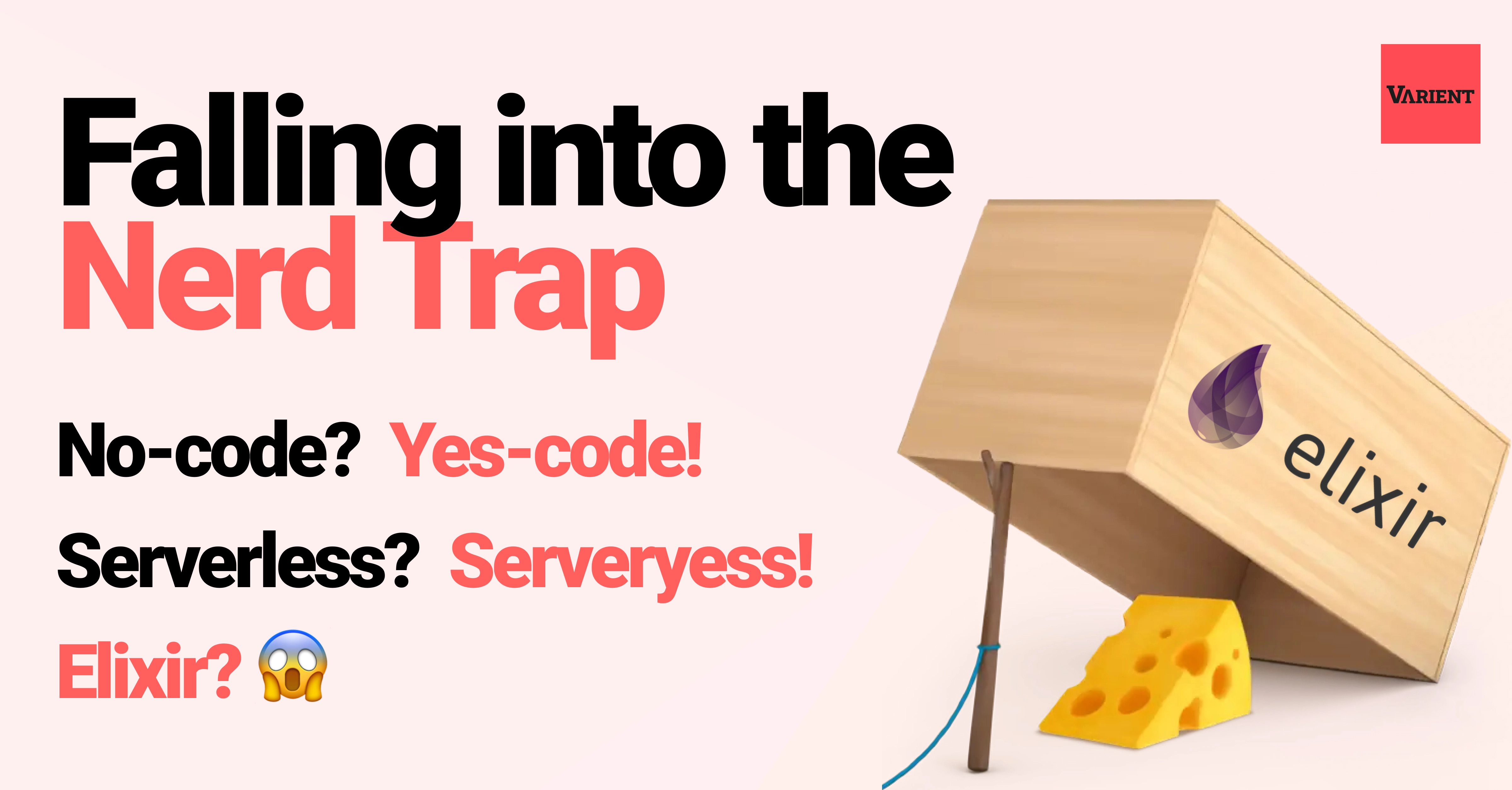
I went back and forth more times than I care to admit.  <br>
No-code? Full-stack JS? Backend-first? A hybrid approach? Here’s my reasoning.</p>
<p>
I settled on: <strong>Remix + Phoenix + Oban</strong> </p>
<p>
Is it the perfect stack? No.  <br>
But is it perfect <em>for me</em>? Absolutely. </p>
<p>
As a reminder: I’m building a Shopify App that improves the conversion rate of stores using AI. Let’s dive in!</p>
<h2>
Why Remix?</h2>
<p>
This one’s easy. Shopify is pushing Remix hard. That means:</p>
<ul>
  <li>
Built-in Shopify App Bridge (instant auth, no extra setup)  </li>
  <li>
Works seamlessly with GraphQL queries  </li>
  <li>
Great DX for full-stack development. Built-in design-system (Polaris)  </li>
</ul>
<p>
I could have gone all-in on Remix. TypeScript is actually nice! And it was a close call!  <br>
But I wanted more control over <strong>data, processing, and long-running jobs</strong>. </p>
<p>
Which brings me to…</p>
<h2>
Why a Dedicated Backend?</h2>
<p>
A backend lets me <strong>separate concerns</strong> and <strong>repurpose logic</strong> beyond this single app. </p>
<p>
I’ve seen this work incredibly well before.  <br>
At Vitals, we had a good old monolithic backend that eats all the fancy “modern” tech stacks for breakfast. It scaled beautifully. Costs were super low. Chef’s kiss! </p>
<p>
So I picked… <strong>Phoenix!</strong></p>
<h2>
Why Phoenix? (And What’s Elixir Anyway?)</h2>
<p>
If you’ve never looked into Elixir, it’s consistently <a href="https://survey.stackoverflow.co/2024/technology/#admired-and-desired">one of the most loved languages</a> in developer surveys. It is based on Erlang (built for distributed, fault-tolerant systems), and it is the functional sibling of Ruby.</p>
<p>
I started playing around with Elixir during the Advent of Code in 2022, and got productive quickly.</p>
<p>
Why does it make sense for <a href="https://varientlabs.com">Varient</a>? </p>
<ol>
  <li>
<strong>Concurrency &amp; Fault Tolerance</strong> – Perfect for running parallel tasks &amp; background jobs   </li>
  <li>
<strong>Ecosystem</strong> – Oban for workers, Ecto for DB, Generators for scaffolding  </li>
  <li>
<strong>Scalability</strong> – It’s cost-efficient, easy to deploy separately  </li>
  <li>
<strong>Bonus</strong> – I love writing Elixir.  </li>
</ol>
<p>
Did I make a mistake? Would it be better to do it all in Remix? Or would I be faster with a no-code tool? </p>
<p>
Maybe.</p>
<p>
But I feel productive in it. I trust it. It’s fun. And in the end, that’s what matters most.</p>
]]></content>
    <id>https://adamjuras.com/posts/falling-into-the-nerd-trap</id>
    <title>Falling Into The Nerd Trap</title>
    <updated>2025-02-04T00:00:00Z</updated>
  </entry>
  <entry>
    <content type="html"><![CDATA[<p>
  <img src="/images/posts/architect-vs-carpenter.webp" alt="Architect versus Carpenter">
</p>
<p>
Every morning I read one chapter from Rick Rubin’s latest book. It helps me push through building <a href="https://varientlabs.com">Varient</a>. This quote hit home:</p>
<blockquote>
  <p>
The inspired-artist aspect of your self may be in conflict with the craftsperson aspect, disappointed that the craftsperson is unable to create the physical embodiment of the inspired artist’s vision. This is a common conflict for creators, since there is no direct conversion from abstract thought to the material world. The work is always an interpretation.  </p>
</blockquote>
<p>
After years in leadership positions, there’s a gap between what I envision and what I can build with my own hands. My taste evolved, but my maker skills got dusty. </p>
<p>
I’ve been here before, more than once.</p>
<p>
The beginning is brutal. The code feels rusty, the UI ugly. The ambitions too high, the progress too slow. </p>
<p>
Yet it gets better. Each day the muscle memory comes back a bit more.</p>
<p>
I need to accept that there will always be a gap between vision and reality. What matters is shipping and iterating.</p>
<p>
For those wondering: Rick Rubin is the legendary producer behind artists like Red Hot Chili Peppers, Beastie Boys, System of a Down, Run DMC, Adele, and many more. </p>
<p>
His book, “The Creative Act”, is a gift to every creator.</p>
]]></content>
    <id>https://adamjuras.com/posts/architect-vs-carpenter</id>
    <title>Architect vs Carpenter</title>
    <updated>2025-02-10T00:00:00Z</updated>
  </entry>
  <entry>
    <content type="html"><![CDATA[<p>
  <img src="/images/posts/a-day-with-ai.webp" alt="A Day Working With AI">
</p>
<p>
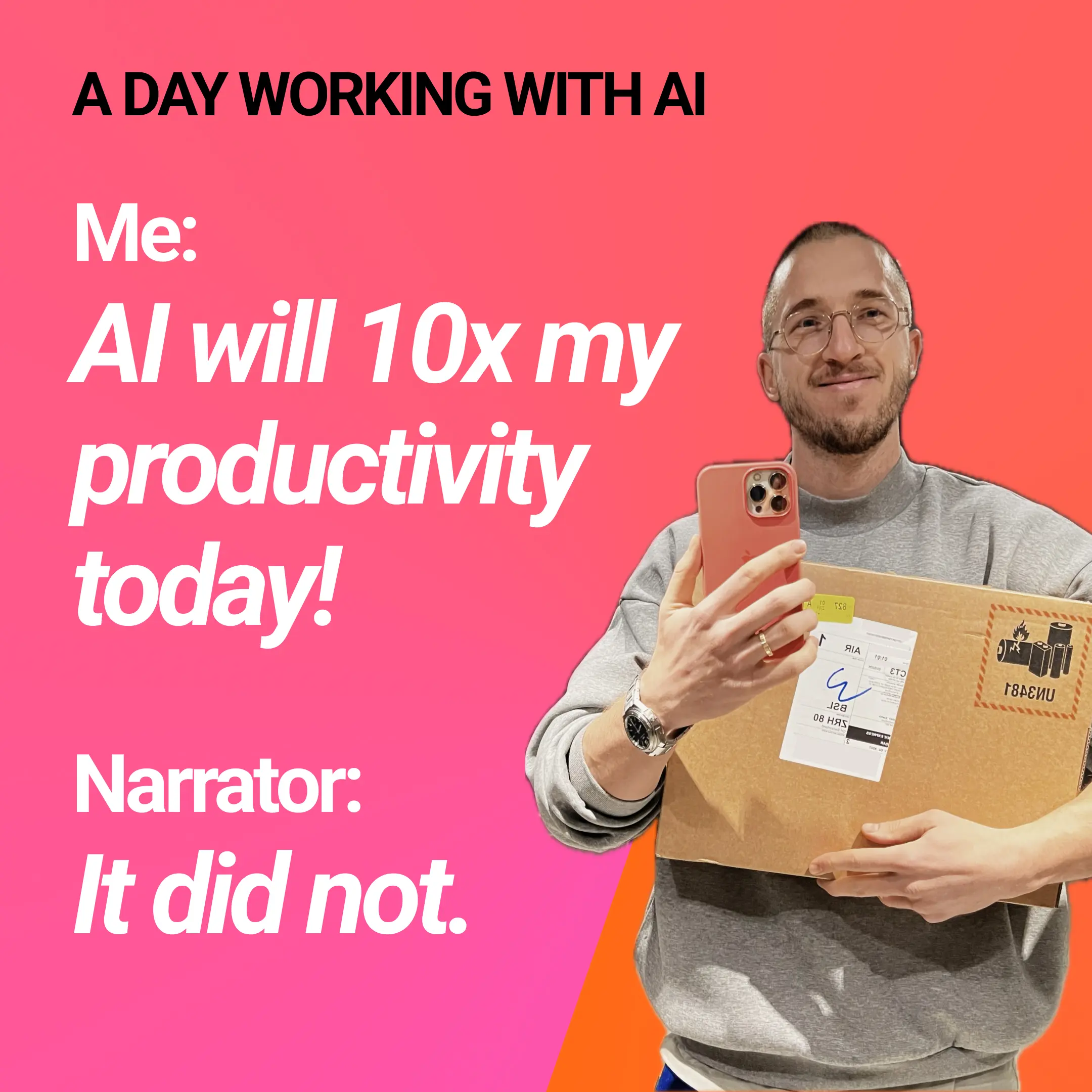
This is an honest log of a day working with AI.</p>
<p>
8AM. My new MacBook arrives. Quick setup, then get to work!</p>
<p>
ChatGPT generated a checklist of tools for me to install.  <br>
“Since you do ecommerce, AI, and backend development, here’s what I suggest: … “. Okay …</p>
<p>
Looked perfect on paper. Like my dating profile from 2009.</p>
<p>
I raced through the instructions like a hacker in a Hollywood movie. Until I hit a wall with asdf (the package manager). </p>
<p>
20 minutes of debugging later: turns out ChatGPT had outdated docs. Classic. I tag in Claude, who actually gives me the right solution. Nice save, but at this point, manually installing everything would’ve been faster.</p>
<p>
Finally got that sorted and jumped into <a href="https://www.linkedin.com/company/varientlabs/">Varient</a>. </p>
<p>
First roadblock: cryptic error on startup. At least ChatGPT quickly spotted I was missing ENV variables. Small win. Look at me, living in the future!</p>
<p>
Project running ✓  <br>
Frontend talks to backend. Backend talks to OpenAI ✓  <br>
UI crashes everywhere ✗  <br>
My confidence level ↘️</p>
<p>
More strange IDE warnings. Both Claude and ChatGPT led me down the wrong path. It’s like having two very smart interns who are too confident.</p>
<p>
I finally find the issue. </p>
<p>
OpenAI’s “structured response” API returns non-deterministic JSON. Is this a joke? In human speak: you can request a specific format, but sometimes it gives you whatever it feels like. Not very different from asking Nomad (my dog) to do tricks.</p>
<p>
I know it will get better. This is the worst AI will ever be.  <br>
But for now, don’t believe everything the hypeboiz are telling you.</p>
]]></content>
    <id>https://adamjuras.com/posts/a-day-with-ai</id>
    <title>An honest log of working with AI</title>
    <updated>2025-02-12T00:00:00Z</updated>
  </entry>
  <entry>
    <content type="html"><![CDATA[<blockquote>
  <p>
<strong>Note:</strong> This is a reaction to a post on LinkedIn. To get the full context, <a href="https://www.linkedin.com/posts/adamjuras_tech-jobs-in-the-us-are-not-coming-back-activity-7297883883323187200-RjtJ">read the story here</a>.  </p>
</blockquote>
<p>
Let’s talk about local engineering jobs being replaced by cheaper locations.</p>
<p>
I hired well over 100 developers in the past 15 years. While in Switzerland, I hired in Zurich, Belgrade, and in Bucharest. Before that, I worked in outsourcing in Romania and hired in Cluj and Chisinau. </p>
<p>
My guess about AI replacing jobs is as good as yours, but I do have experience with “jobs moving to more economically efficient locations”.</p>
<p>
This is not to brag, but real-world experience matters when discussing industry trends. I don’t feel confident to predict the future, but I can say what I’ve seen so far.</p>
<p>
For simplicity, let’s name the two camps Western and Eastern countries.</p>
<p>
The nearshoring trend over the past 20 years resulted in the tech market in Eastern countries booming. </p>
<p>
The salary gap between West and East was significant.  <br>
This resulted in many projects being outsourced.  <br>
Salaries doubled, tripled, quadrupled.  <br>
This attracted even more people to tech jobs.  <br>
Which resulted in more expertise.  <br>
More expertise = more projects being outsourced.</p>
<p>
A classical flywheel effect. </p>
<p>
At the same time, Western salaries were not affected, as these countries  continued to develop &amp; attract top talent from all around the world. There’s more software to be written (and maintained) than ever before.</p>
<p>
The gap between Western and Eastern salaries got to a level where economically it did not make a huge difference anymore. Plus, do you hire at nearshore locations through an agency (total costs close to local), or directly and deal with all the bureaucracy?</p>
<p>
We arrived to a point where you choose nearshoring primarily because of the vast amount of experienced people available at these locations. </p>
<p>
Now that the market cooled off, another interesting thing happened. The exact opposite of jobs moving East.</p>
<p>
I hear from friends that, when push comes to shove, and companies need to shed weight, they save money by reducing nearshoring budgets, not local headcount. It is the easier call to stomach on the short run.</p>
<p>
Because of this, the job market in the East seems to be affected worse than in the West. </p>
<p>
To summarize: don’t believe the fearmongering. Nobody can predict the future. What’s clear is that AI is creating many opportunities today.</p>
<p>
Let’s build, not panic.</p>
]]></content>
    <id>https://adamjuras.com/posts/outsourcing-effect-on-tech-jobs</id>
    <title>The effect of outsourcing on tech jobs</title>
    <updated>2025-02-19T00:00:00Z</updated>
  </entry>
  <entry>
    <content type="html"><![CDATA[<p>
  <img src="/images/posts/i-ve-built-an-app-while-on-zoom.webp" alt="I&#39;ve built an app while on a Zoom call">
</p>
<p>
These claims around AI coding tools are getting wild. I want to see for myself what’s behind the hype.</p>
<p>
Having switched between coding and management roles multiple times, each transition forced me to relearn how to build efficiently. </p>
<p>
I’ve developed an interest in finding the right tools and workflows that deliver results.</p>
<p>
Here’s my current flow. </p>
<p>
I start sketching on a whiteboard.  <br>
Then refine in Figma.  <br>
Then start coding in Neovim (I switched from VSCode, which I also liked - that’s another story). </p>
<p>
When coding, I have two main flows:</p>
<ol>
  <li>
    <p>
Claude 3.5 Sonnet + Aider      <br>
Claude maps my entire git repo and edits multiple files in one go. I can stay in my editor.    </p>
  </li>
  <li>
    <p>
Manual back-and-forth with Claude/ChatGPT      <br>
Often, step 1 feels too big, so I copy-paste snippets and iterate manually. More friction, but usually faster.    </p>
  </li>
</ol>
<p>
I don’t use Github Copilot, I find autocomplete intrusive.</p>
<p>
I feel pretty fast with this setup.  <br>
But I’m not “I built a full-blown app while I was in a Zoom call” fast.</p>
<p>
Is that claim even real? Can you build an app by typing plain English into a text box?</p>
<p>
What does the code under the hood look like? Can you continue from these prototypes, or is it throwaway work?</p>
<p>
And ultimately, how’s the actual experience to build like this? Is “Vibe Coding” real?</p>
<p>
To find out, I will test-drive the most common AI-powered coding tools. I started with mapping out the landscape to see what’s out there.</p>
<p>
Here’s my first pass at a comparison table. Sharing this publicly to get input.</p>
<p>
<a href="https://hipwerk.notion.site/AI-Builder-Tools-19e396dc8f8380439753df561c357ede">AI Builder Tools</a></p>
<p>
Have you used any of these tools?  <br>
Which one should I try first?  <br>
What do you want to see tested?</p>
]]></content>
    <id>https://adamjuras.com/posts/ai-coding-tools-whats-behind-the-hype</id>
    <title>AI Tools: Beyond The Hype</title>
    <updated>2025-02-25T00:00:00Z</updated>
  </entry>
  <entry>
    <content type="html"><![CDATA[<p style="margin-bottom: 4rem;">
    <img src="/images/posts/we-do-this-not-because-it-is-easy.jpeg" alt="We do this not because it is easy" style="display:block; margin: 0 auto;"></p>
<p>
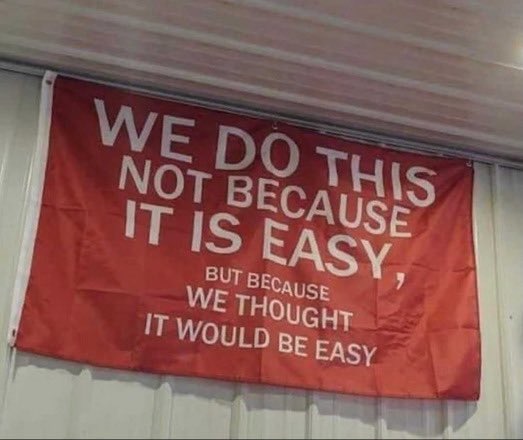
Here’s an honest log of my first 60 days of solopreneurship.  <br>
For transparency, I took screenshots of my LinkedIn stats, GitHub contributions, and of myself (lol, does an elevator selfie count as a real life screenshot?)  <br>
<a href="https://www.linkedin.com/posts/adamjuras_heres-an-honest-log-of-my-first-60-days-activity-7302595077191745538-zsvx?utm_source=share&utm_medium=member_desktop&rcm=ACoAAAHNNDcBQYTQhxHkwdKsSRGXMsuYPM8CpDI">You can see them here</a></p>
<h3>
1. Varient</h3>
<p>
<strong>Score: 3/5</strong>  <br>
I’m at 90%. Let’s see if the last 10% follows the usual law of taking just as long.</p>
<p>
What’s working: </p>
<ul>
  <li>
The tech stack (Remix + Phoenix) feels right after all that overthinking.  </li>
  <li>
Daily coding has brought back muscle memory.  </li>
  <li>
Pair programming with AI helped me climb back to speed fast.  </li>
</ul>
<p>
What’s challenging:</p>
<ul>
  <li>
Scope creep. I really tried to keep it tight, but I could have done better.  </li>
  <li>
Making tons of micro-decisions daily across design, product, and dev is mentally taxing.  </li>
  <li>
Coding with AI. It’s an acquired taste. Forcing myself to get used to it.  </li>
</ul>
<h3>
2. Coaching</h3>
<p>
<strong>Score: 5/5</strong>  <br>
This was the biggest surprise. When I offered free 1:1 coaching spots last month, I wasn’t sure what to expect. </p>
<ul>
  <li>
More people signed up than I could handle. (had to limit spots)  </li>
  <li>
It felt natural from the start, and I built a strong connection with all three mentees.  </li>
  <li>
Seeing real impact on someone’s career makes me rethink how I measure success. It’s been the most unexpected highlight.  </li>
</ul>
<p>
Coaching gives me energy for product development, which is really cool.  <br>
I want to open up another round soon.  <br>
More on that in a separate post.</p>
<h3>
3. Posting on LinkedIn</h3>
<p>
<strong>Score: 4/5</strong>  <br>
I committed to posting 1-2 times weekly. So far, so good.</p>
<ul>
  <li>
The first posts took forever to write.  </li>
  <li>
Finding my voice has been a journey in itself.  </li>
  <li>
Balancing content creation with product building is harder than expected.  </li>
  <li>
The main benefit: Writing forces clarity in my own thinking. I used to write to explain ideas, now I write to understand them.  </li>
</ul>
<h3>
4. Life Happens</h3>
<p>
Six weeks ago, I had a basketball injury.  <br>
Nothing says “welcome to solopreneurship” like trying to build a product while on crutches.</p>
<p>
Making coffee and bringing it to my desk? A logistical challenge.  <br>
Taking Nomad for a walk? Impossible.</p>
<p>
But tonight, I’m heading back to basketball practice for the first time.  <br>
Progress.</p>
<p>
And progress is everything.</p>
]]></content>
    <id>https://adamjuras.com/posts/solopreneur-journey-60-days-check-in</id>
    <title>60 Days Solo: An honest check-in</title>
    <updated>2025-03-03T00:00:00Z</updated>
  </entry>
  <entry>
    <content type="html"><![CDATA[<p>
I was stuck for two days on a feature after Sonnet 3.7 almost one-shot it, but then I just couldn’t make it work. This morning I started from scratch and implemented the whole thing in 1 hour, the old-fashioned way.</p>
<p>
That’s it. That’s the post.</p>
<p>
Actually, just when I was about to hit “Post”, I had an observation.</p>
<p>
The psychology of coding with AI is strange.</p>
<p>
On one hand, you write (or say) prompts in English and you get many lines of code across multiple files. Sometimes it works with a single try. Magic. Sometimes you repeat this many times until it works. And sometimes it never works.  <br>
On one hand, you write (or say) prompts in English and you get many lines of code across multiple files. Sometimes it works with a single try. Magic. Sometimes you repeat this many times until it works. And sometimes it never works.</p>
<p>
On the other hand, you need to write each line by hand, create multiple files, read the docs, switch to the browser window several times, back and forth, ugh…</p>
<p>
The first one feels like gambling. We’re all suckers for “just one more try”. When it works, all the dopamine is released at once.  <br>
The second one, although tedious, is a nice &amp; steady release. A flow state.</p>
<p>
To me, that flow state is what real “vibe coding” is like.</p>
]]></content>
    <id>https://adamjuras.com/posts/the-psychology-of-building-with-ai</id>
    <title>The Psychology of Building with AI</title>
    <updated>2025-03-06T00:00:00Z</updated>
  </entry>
  <entry>
    <content type="html"><![CDATA[<div style="margin-bottom: 4rem;">
   <img height="600" src="/images/posts/the-hedgehog-and-the-fox-and-ai.jpg" alt="The Hedgehog And The Fox And AI" style="display:block; margin: 0 auto; height:600px;"></div>
<p>
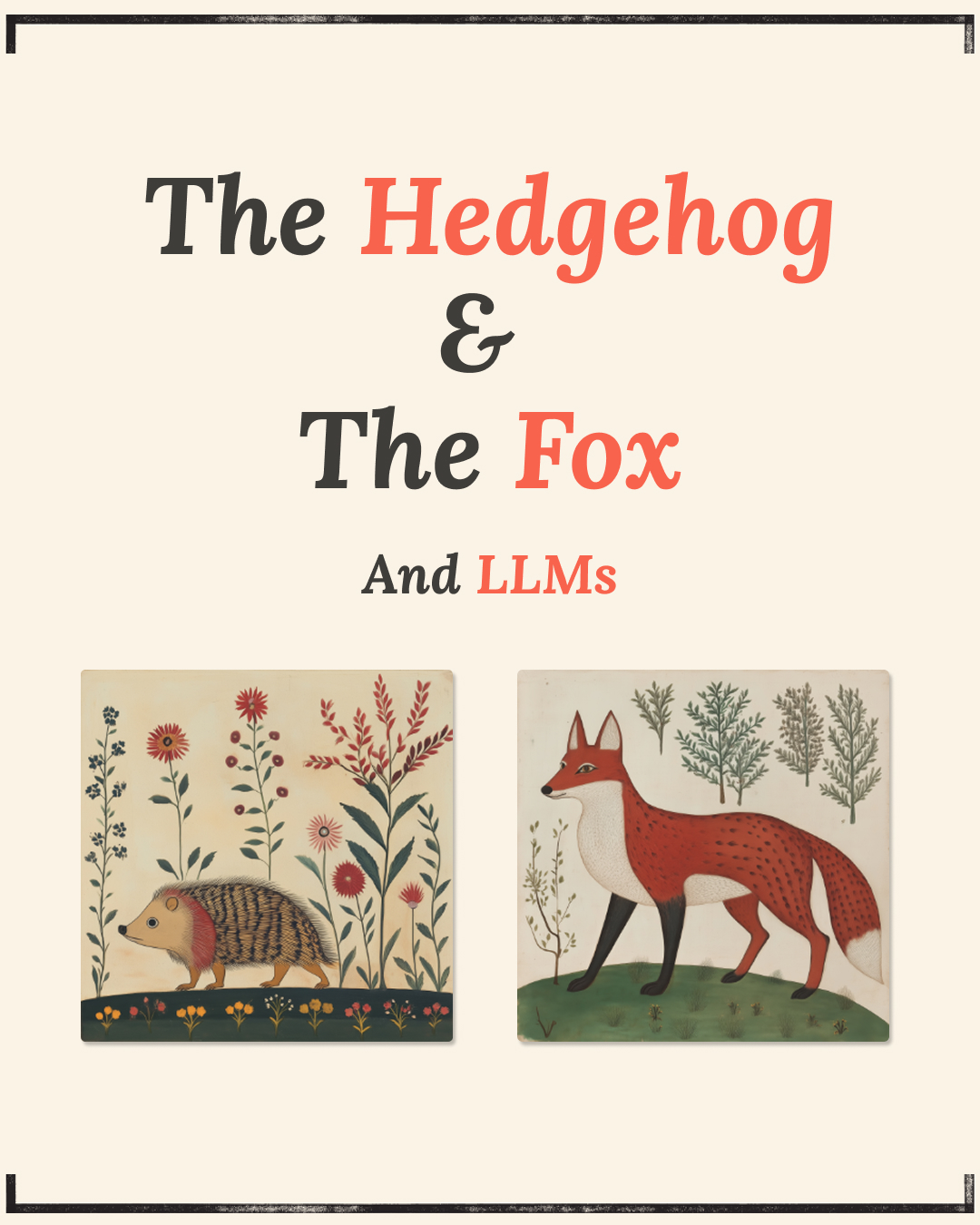
“The fox knows many things, but the hedgehog knows one big thing.”</p>
<p>
This simple idea from Isaiah Berlin has fascinated me my entire career.</p>
<p>
As a natural fox, jumping between product, engineering, and leadership, I’ve often envied hedgehogs with their deep, specialized expertise.</p>
<p>
Then AI flipped everything upside down.</p>
<p>
Some say hedgehogs will thrive because deep expertise is the last thing AI can’t replace.  <br>
Others argue foxes will win because AI handles the specialized work while humans connect the dots.</p>
<p>
Who’s right?</p>
<p>
And which one are you: 🦔 or 🦊?</p>
]]></content>
    <id>https://adamjuras.com/posts/the-hedgehog-and-the-fox-and-LLMs</id>
    <title>The Hedgehog and the Fox and LLMs</title>
    <updated>2025-03-13T00:00:00Z</updated>
  </entry>
  <entry>
    <content type="html"><![CDATA[<div style="margin-bottom: 4rem;">
   <img height="600" src="/images/posts/vibe-coding-with-kefir.jpg" alt="Vibe Coding with Kefir" style="display:block; margin: 0 auto; height:600px;"></div>
<p>
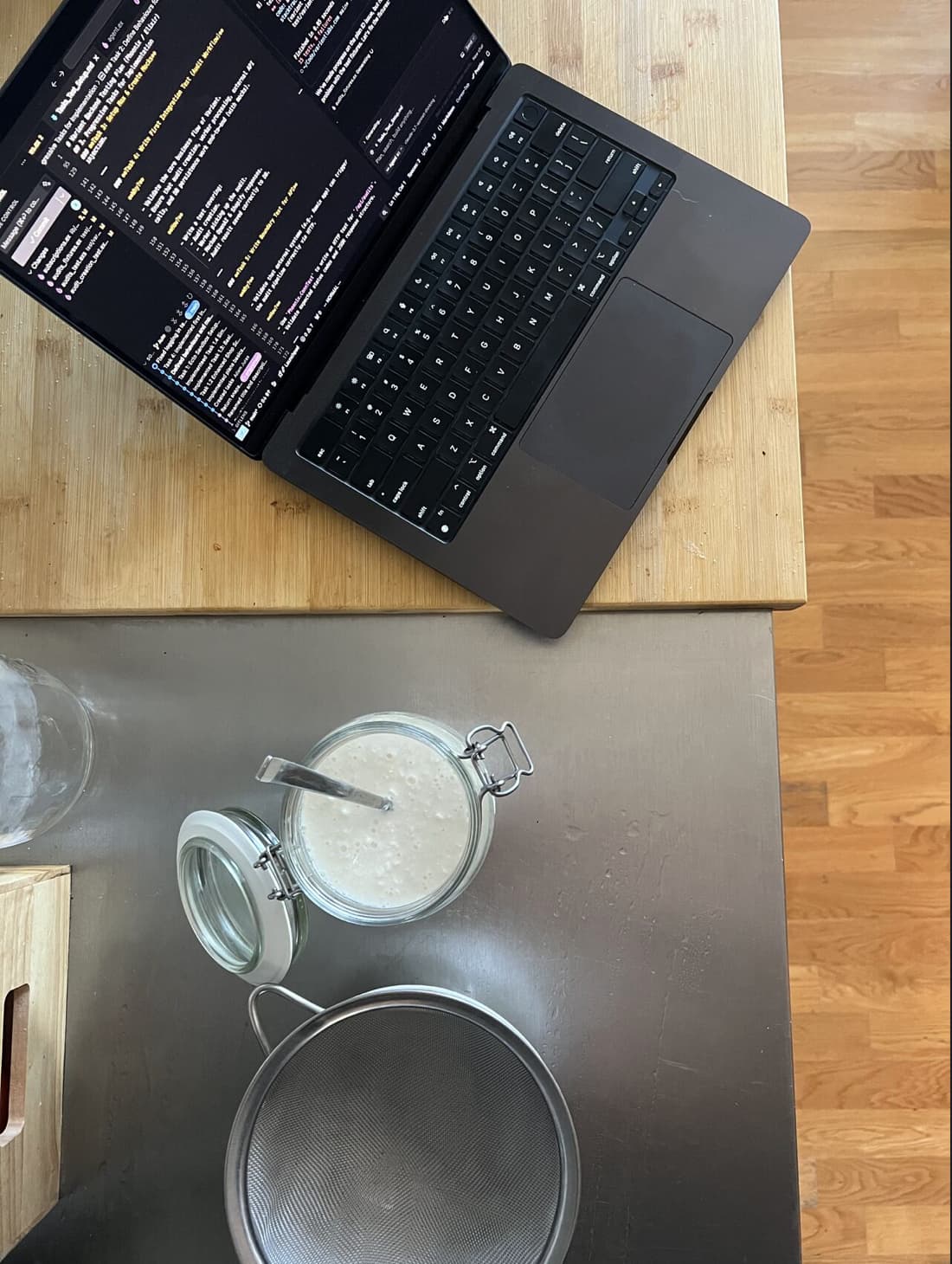
A week of using Cursor extensively to build Varient changed my mind completely.</p>
<p>
I built in a matter of days what took us, a small team, weeks in the past.</p>
<p>
I’ve found five must-have principles that made the difference:</p>
<ol>
  <li>
    <p>
Planning. Write down in simple words the project context, the new feature and jobs to be done.    </p>
  </li>
  <li>
    <p>
Breadboarding. Like in electrical engineering, split the feature in the needed elements.    </p>
  </li>
  <li>
    <p>
Slice vertically, not horizontally. Implement full small slices integrating FE with BE as early and as often as possible.    </p>
  </li>
  <li>
    <p>
Write tests. Mostly integration. Some unit tests too. This helps catch errors early.    </p>
  </li>
  <li>
    <p>
Avoid scope creep. You <em>must</em> simplify everywhere you can. Especially when a new feature is one prompt away.    </p>
  </li>
</ol>
<p>
I now always start with a specs doc. I also include a section where I describe how I want to work together with the LLM.</p>
<p>
If you’re interested, hit me up and I will share a real example I used recently.​​​​​​​​​​​​​​​​</p>
<p>
P.S. in the picture I’m fermenting kefir while I continue to prompt. It really is addictive (the kefir too)</p>
]]></content>
    <id>https://adamjuras.com/posts/from-skeptic-to-hooked-with-cursor</id>
    <title>Vibe Coding with Cursor and Kefir</title>
    <updated>2025-03-20T00:00:00Z</updated>
  </entry>
  <entry>
    <content type="html"><![CDATA[<div style="margin-bottom: 4rem;">
   <img height="600" src="/images/posts/dont-major-in-minors.jpg" alt="Don't Major in Minors" style="display:block; margin: 0 auto; height:600px;"></div>
<p>
Maybe you noticed, this year I posted every week on LinkedIn. That was a goal I set for myself. Last week, I skipped one. It taught me a principle I have seemingly forgotten.</p>
<p>
If I take one step back, I see there were clear benefits.</p>
<p>
I made actual friends, not just connections. Here’s a (hopefully not too awkward) public shoutout to Ady Rugina, who is one of them. I really value our exchanges. You helped me see things more clearly.</p>
<p>
People started to associate me with certain topics. Someone even told me I’m the most active person on LinkedIn they know. Not sure if that’s a compliment.</p>
<p>
But being active here takes a toll. It drains energy from what really matters to me: building products.</p>
<p>
When you’re solo, it’s hard to kickstart multiple paths at once: building, growing an online presence &amp; coaching.</p>
<p>
So I’m not majoring in minors anymore.</p>
<p>
Writing? Back-burner. I’ll still post regularly, but with capped investment.  <br>
Coaching? Back-burner. I’ll share an update, then let word of mouth do its thing.</p>
<p>
This keeps me focused on my major: building products.</p>
<p>
P.S. Kudos to all of you who post here regularly <em>and</em> do a kick-ass job at your “major”. I now know how hard it is.</p>
]]></content>
    <id>https://adamjuras.com/posts/dont-major-in-minors</id>
    <title>Don&apos;t Major In Minors</title>
    <updated>2025-04-01T00:00:00Z</updated>
  </entry>
  <entry>
    <content type="html"><![CDATA[<p>
The teacher finishes a lesson and asks “any questions?”</p>
<p>
Silence…</p>
<p>
You think hard, but nothing comes to mind.</p>
<p>
Then one hand goes up.</p>
<p>
A kid speaks up and everyone, including the teacher, pauses for a second.</p>
<p>
A flash of genius! Clear thinking grounded in real understanding.</p>
<p>
It’s so obvious in retrospect.  <br>
Why didn’t I think of that?</p>
<p>
I deeply admired them. Even felt envious!</p>
<p>
Today, you ask AI instead of a teacher.  <br>
The answers are instant and the knowledge endless.</p>
<p>
That kid with great questions will win big.</p>
<p>
Because in a world full of answers, the most important skill is knowing what to ask.</p>
]]></content>
    <id>https://adamjuras.com/posts/the-kid-who-is-going-places</id>
    <title>The kid who is going places</title>
    <updated>2025-04-13T00:00:00Z</updated>
  </entry>
  <entry>
    <content type="html"><![CDATA[<p>
We ditched estimates completely at tutti.ch in 2019, and I haven’t used them ever since. Instead, we did “right-sizing”.</p>
<p>
Most of the industry is doing some form of agile now, yet only 7% of software projects are on time and on budget.</p>
<p>
So why do we obsess over perfectly predicting what we can do in 2 weeks?</p>
<p>
Estimating complexity, not time, does not make it better.  <br>
Even after attending all the agile trainings, the notion of fitting tasks ordered by complexity into fixed-time cycles still does not make sense to me.</p>
<p>
Fibonacci has good intentions, but leads to weird outcomes:  <br>
“How come this is an 8? Well, it’s bigger than a 5 and smaller than a 13”. Yuk.</p>
<p>
Planning poker feels silly because it is silly.  <br>
It’s like a corporate advertisement from the 90s: “Here’s how grown-ups have fun at the office.” 📺</p>
<p>
So, what should you do instead?</p>
<p>
You fit work to time instead of estimating time for work.</p>
<p>
Instead of asking “how long does it take?” you should ask “can we ship this in X days?”. If the answer is “no”, you break it down.</p>
<p>
X is a number that you agree on with your team. I recommend starting with 3 days. At tutti.ch our limit was 1 day, which was too short in retrospect.</p>
<blockquote>
  <p>
“We all know that estimates will be wrong, but the point of our estimates is not to be accurate but to have the right conversations and reach a common understanding.”    <br>
Maarten Dalmijn  </p>
</blockquote>
<p>
Plus, if all tasks are similar in size, it makes planning easy.</p>
<p>
I’m thankful to people like Maarten for normalizing this conversation. It’s about time we questioned these sacred cows.</p>
<p>
If you want to read more on this topic, I recommend his article on <a href="https://mdalmijn.com/p/roman-estimation-a-simple-easy-and">Roman Estimation</a></p>
]]></content>
    <id>https://adamjuras.com/posts/estimates-are-harmful</id>
    <title>Estimates do more harm than good</title>
    <updated>2025-07-23T00:00:00Z</updated>
  </entry>
  <entry>
    <content type="html"><![CDATA[<div style="margin-bottom: 4rem;">
   <img height="600" src="/images/posts/chatgpt-apps-dark.jpg" alt="Should I Build ChatGPT Apps?" style="display:block; margin: 0 auto; height:600px;"></div>
<p>
OpenAI’s new Apps SDK is being pitched as a new “App Store moment”, but it’s actually closer to SEO inside a walled garden than a true platform play for independent developers.</p>
<p>
Let’s unpack this.</p>
<h2>
The ownership problem</h2>
<p>
Ownership is the essence of product defensibility. And in OpenAI’s ecosystem, you don’t own:</p>
<ul>
  <li>
<strong>Intent</strong>: ChatGPT mediates discovery via model routing.  </li>
  <li>
<strong>UI</strong>: Strictly constrained widgets and cards, framed by ChatGPT’s UX.  </li>
  <li>
<strong>User relationship</strong>: By default, you don’t get identifiers, emails, or retention hooks.  </li>
  <li>
<strong>Re-engagement</strong>: There’s no home screen, just an empty text box.  </li>
</ul>
<p>
OpenAI will add in-app payments and revenue sharing, which is convenient.</p>
<p>
But payments will only fix monetization friction, not the ownership problem.</p>
<p>
You’re still just a content provider in ChatGPT’s garden, not a first-party product.</p>
<p>
More like a Spotify artist or an Amazon marketplace seller, not a web/mobile developer with your own users.</p>
<h2>
Who this is good for</h2>
<ol>
  <li>
Brands with strong moats (Ecommerce, Marketplaces, Music, inventory-based businesses)  </li>
  <li>
Transactional APIs, although replaceable (weather, flights, translation, summarization)  </li>
  <li>
Large consumer brands  </li>
</ol>
<h2>
What bothers me the most</h2>
<p>
It’s a direct attack on the open web.</p>
<p>
The Apps SDK doesn’t extend the open web, it subsumes it.</p>
<p>
It’s anti-hyperlink.</p>
<p>
For OpenAI, the ideal flow is when the experience begins and ends in ChatGPT.</p>
<p>
It’s the walled garden of walled gardens.</p>
<h2>
So what should you do?</h2>
<p>
The 800 million weekly users are too good of a value proposition to ignore it.</p>
<p>
Use it for reach, not reliance.</p>
<p>
Build your real product outside, and treat ChatGPT as just another channel.</p>
]]></content>
    <id>https://adamjuras.com/posts/should-i-build-chatgpt-apps</id>
    <title>Understanding OpenAI&apos;s new Apps announcement</title>
    <updated>2025-10-09T00:00:00Z</updated>
  </entry>
</feed>